Drug Discovery
Generative chemistry, docking simulations and ADMET prediction pipelines running on dense GPU/TPU clusters — compressing months of wet-lab cycles into days.
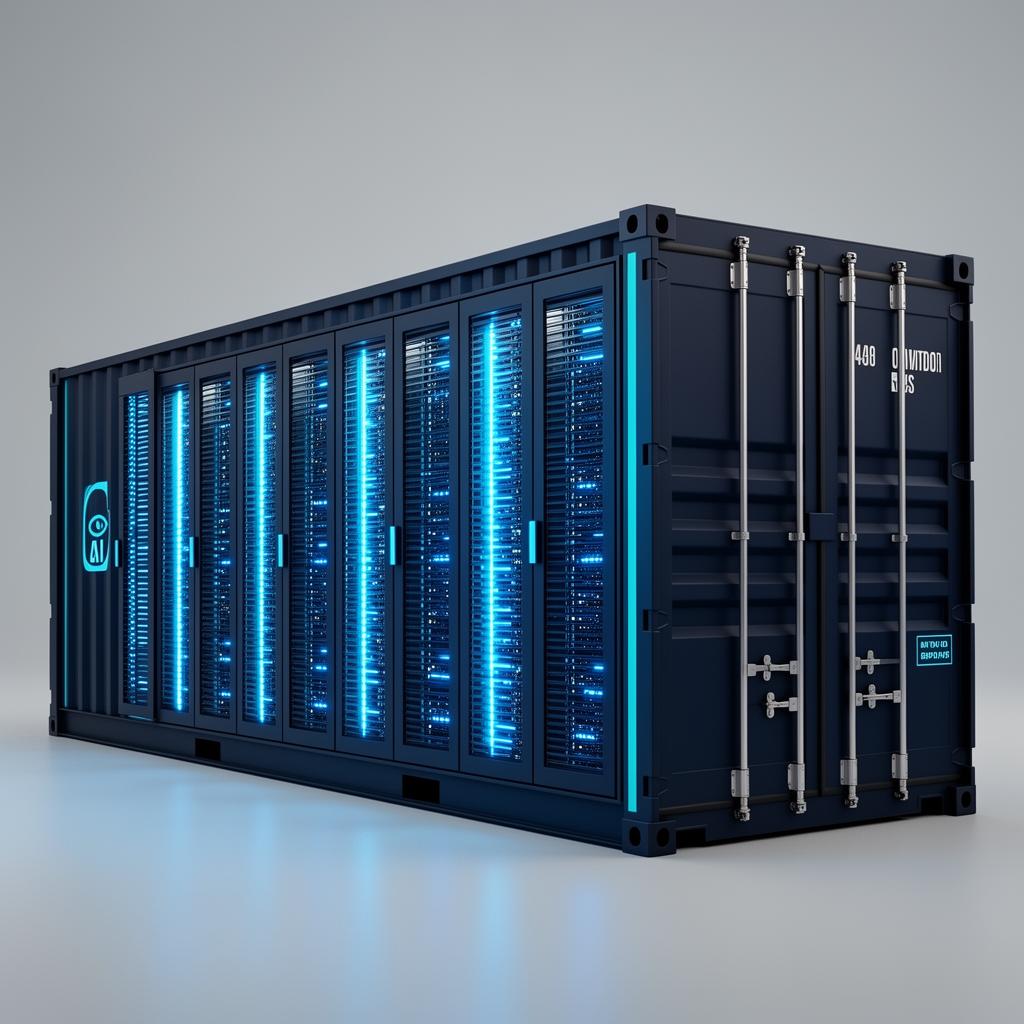
A 40-foot state-of-the-art AI data center container engineered for drug discovery, climate modeling, protein-folding and materials research — paired with active bio-electricity R&D inspired by the Levin Lab at Tufts to push compute efficiency past today's silicon ceiling.
Generative chemistry, docking simulations and ADMET prediction pipelines running on dense GPU/TPU clusters — compressing months of wet-lab cycles into days.
High-resolution earth-system and regional weather models, downscaling ensembles and renewable-yield forecasting for grid and agriculture operators.
AlphaFold-class structure prediction and misfolding analysis to study neurodegenerative and prion-related disease pathways at scale.
Graph neural networks and DFT-surrogate models exploring battery chemistries, photovoltaics and structural composites for next-gen energy hardware.
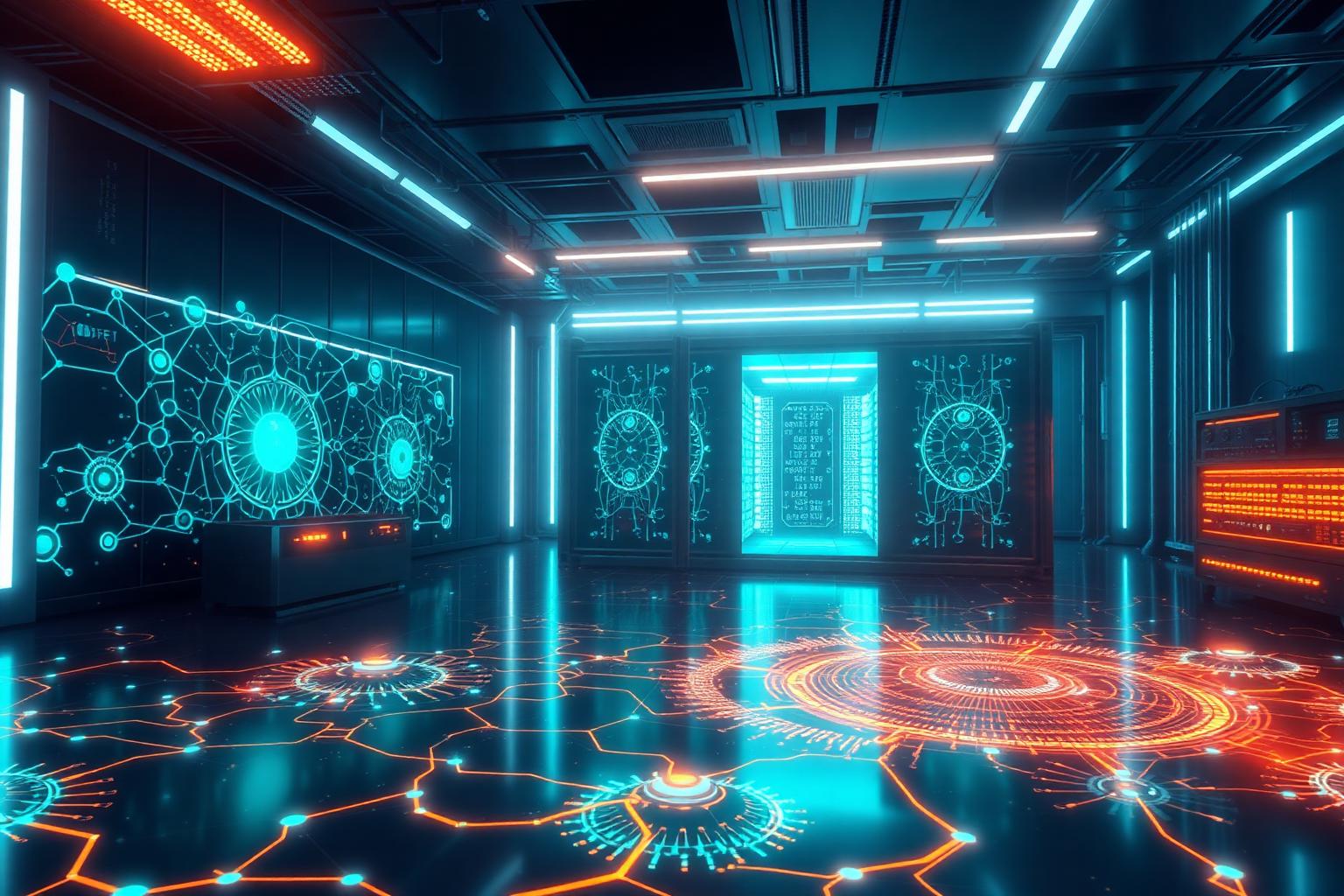
Dr. Michael Levin's group at Tufts (Allen Discovery Center, Center for Regenerative and Developmental Biology, and the Institute for Computationally Designed Organisms) has shown that cells use endogenous bioelectric signals — patterned ion flows across membranes — as a primitive computing and memory substrate that guides form and behavior.
We are translating that insight into hardware. Our R&D explores ion-gradient and membrane-potential inspired modules as ultra-low-power co-processors and sensors alongside silicon — the goal is compute that runs cooler, draws less grid power, and degrades gracefully like living tissue.
Caution — early-stage R&D. Bio-electric co-processing is theoretical and has not yet been proven at production scale. No commercially available hardware currently exists.
Photonic chips move data between accelerators at a fraction of the energy per bit of copper, while Cerebras wafer-scale parts handle dense AI training and inference on-chip — minimising off-die traffic.
Direct-to-chip liquid loops and rear-door heat exchangers do the heavy lifting, augmented by Microsoft-style channelled cooling and trim A/C, with air-cooled fallback for graceful degradation.
On-site storage delivers HVDC straight to the racks, cutting AC↔DC conversion stages, shedding waste heat, and shrinking the cooling load before a single watt hits a chip.
Three subsystems share one 40 ft shell: a photonic interconnect fabric for data, a hybrid liquid loop for heat, and an HVDC bus for power — each color-coded below.
Membrane-potential inspired analog elements that compute pattern-matching and optimization tasks at a fraction of the energy of equivalent GPU ops.
Engineered cellular sheets interfaced with CMOS, drawing on Levin Lab work on bioelectric pattern memory and xenobot-style self-assembly.
AI agents shift workloads between silicon and bio-electric modules in real time to minimise total kWh per token, per simulation, per molecule.
Independent R&D program. Not affiliated with or endorsed by Tufts University or the Levin Lab — their published work is a scientific inspiration for our engineering roadmap.
The AI Data Center Container is currently an internal research and development initiative. It is not available for public inquiry or new client engagement at this time.
Back to products